Pas encore d’article en français : texte de l’article anglais.
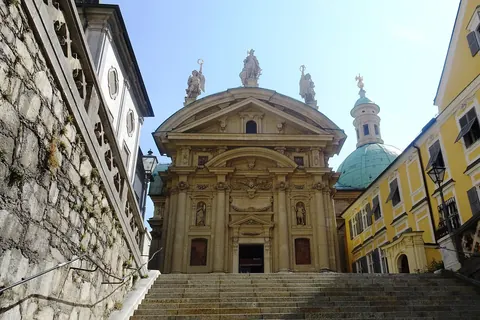
The Mausoleum of Emperor Ferdinand II in Graz was constructed beginning in 1614 under the patronage of Archduke Ferdinand II of Habsburg, who later became Holy Roman Emperor. It was intended to serve as a dynastic burial site and as a symbolic monument associated with the Catholic Counter Reformation in Inner Austria. During Ferdinand II’s reign, the Habsburg monarchy pursued policies that strengthened Catholic influence following the territorial and religious advances made by Protestantism in the region. In this context, the mausoleum was conceived as both a family crypt and a representation of religious and dynastic authority. According to scholarly research, Ferdinand II decided in 1614 to establish a burial site in Graz that would reflect both ecclesiastical and dynastic significance. He entrusted the planning and construction to his Italian court artist, Giovanni Pietro de Pomis. The project involved architects and sculptors over several decades and included elaborate Baroque decoration. The completed structure has been described by scholars as a "triumphal monument of Catholicism" and a "symbol of the Counter Reformation" in Inner Austria, reflecting its historical and religious significance during that period.
Sources
Texte : introduction de l'article Wikipédia Mausoleum of Emperor Ferdinand II (en anglais), sous licence CC BY-SA 4.0 (auteurs : historique de l'article). Faits : Wikidata (CC0). Coordonnées : Wikidata, fonds de carte © contributeurs OpenStreetMap.